Millions of Russian Voters Head to Polls for Russia’s Parliamentary Election Amid War in Ukraine
Russia’s 2026 parliamentary election determines 450 State Duma seats amid Ukraine war. Millions vote as anti-war candidates excluded from ballot.
Russia’s parliamentary election, running across three days in September 2026, places 450 State Duma seats before an electorate shaped by war, economic strain, and a ballot from which most anti-war candidates have already been removed.
SEO Title: Russia’s Parliamentary Election | 450 Seats, Moscow
Introduction
Opening on Friday and running through Sunday, Russia’s three-day parliamentary election is unfolding across polling stations nationwide as voters determine the composition of the 450-seat lower house of parliament, the State Duma. Organised by Russia’s Central Election Commission under the constitutional framework of the Russian Federation, the vote is the first Duma election since the Kremlin launched its full-scale invasion of Ukraine in February 2022. Organisers project that tens of millions of eligible Russian citizens will cast ballots before polls close Sunday evening, with initial and partial results expected to begin emerging at 6pm Moscow time on Sunday and near-complete figures available by Monday.
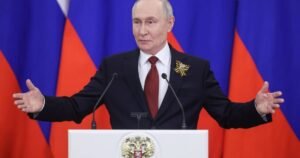
Russia’s parliamentary election arrives under conditions that make it unlike any Duma vote in the post-Soviet era. President Vladimir Putin, in a nationally televised address ahead of the ballot’s opening, framed participation directly in terms of the conflict: casting a vote, he said, would help secure Russia’s victory in Ukraine and demonstrate national resolve in the face of external pressure. The ruling pro-Putin United Russia party enters the contest as the overwhelming favourite in what independent analysts consistently describe as a tightly controlled political system, and the vote’s outcome is widely expected to return United Russia to dominance in the lower chamber.
Four Days Out, And The Ballot Is Already Narrowed Before A Single Vote Is Cast
With voting now underway, the most consequential pre-election development had already occurred weeks earlier, well before the first polling station opened its doors. Russia’s Supreme Court ruled that the liberal Yabloko party — the one mainstream party that had publicly called for a ceasefire with Ukraine — had breached electoral rules, effectively removing it from the national party ballot. This is not a conventional multi-party contest in any recognised democratic sense. It is, simultaneously, a test of institutional loyalty, a wartime mobilisation exercise, a mood-reading mechanism for the Kremlin, and a legitimacy-building event conducted on the Kremlin’s own terms.
Some individual Yabloko candidates are still running in single-member constituencies, providing a residual outlet for anti-war sentiment. However, the structural exclusion of the party itself means that voters opposed to the war in Ukraine have no national-level vehicle through which to register that opposition at the ballot box. The Kremlin, for its part, has framed the necessity of national unity around what it describes as increasingly dangerous efforts by Ukraine’s intelligence services and other external enemies to stir unrest inside Russia — a framing that positions dissent itself as a security threat rather than a legitimate political position. Opinion polling conducted ahead of the vote shows a measurable and growing share of Russians expressing anxiety about how the war is affecting daily life, signalling that the Duma election serves a secondary function: gauging the depth of war weariness in Russian society.
From Wartime Framing to Economic Pressure, Three Days of Voting Are Now Unfolding
Polling stations opened Friday and will remain operational through Sunday, with the vote structured across three days — a format the Kremlin has used in previous cycles to maximise turnout figures. The election’s unofficial theme, as articulated by Putin in his pre-vote address, is national resolve: a mandate renewed, a society unified, a war effort ratified from below.
The parties contesting seats in the 450-seat State Duma include United Russia, the long-dominant party of the political establishment, alongside the Communist Party of the Russian Federation, the Liberal Democratic Party of Russia (a nationalist formation despite its name), and A Just Russia — For Truth, a social-democratic-leaning party that nonetheless supports the war. These four parties have collectively held the Duma since the early 2000s and are expected to do so again. Yabloko’s individual constituency candidates represent the only formally anti-war presence on any ballot paper in the country.
The sensory and civic landscape of the election includes state television coverage running continuously, public messaging urging participation as a patriotic act, and polling infrastructure deployed across Russia’s eleven time zones. According to publicly available Kremlin and government communications, the vote is also being conducted in territories Russia occupies in Ukraine — a move condemned by Kyiv and Western governments as illegal under international law.
The economic backdrop against which voters are casting ballots is notably stressed. Ukrainian drone strikes have caused fuel shortages in parts of Russia. Businesses across sectors are contending with high interest rates, a severe labour shortage driven in part by wartime mobilisation, and the sustained weight of Western sanctions. The authorities are expected to use the vote — and particularly the regional distribution of turnout and results — to map where strain is deepest and where loyalty is thinnest.
Behind the 450 Seats Is an Experiment in ‘Wartime Mandate Manufacturing’
The real story here is not the seat count, but the mechanism by which Russia’s political system converts a contested social reality into an uncontested electoral result. What the Kremlin will extract from this vote is not merely a parliamentary majority — United Russia’s majority was never genuinely in doubt — but a quantified expression of national consent to the war in Ukraine, produced under conditions in which dissent has been structurally suppressed.
What participants across Russian civil and political society are being asked to do includes: turning out to vote as an act of patriotic duty, accepting a ballot from which the principal anti-war option has been removed at the national level, absorbing a media environment in which the war’s framing goes essentially unchallenged on any major platform, and returning a parliament whose composition will be cited internationally as evidence of Russian popular support for the conflict.
The platforms through which this mandate will be amplified are state television, state-aligned digital media, and the Kremlin’s international communication apparatus. For top performers inside the system — regions that deliver high turnout and strong United Russia margins — the reward is continued access to federal resource flows and political favour. The programme is one the Kremlin has refined across multiple electoral cycles.
The strategic ambition is clear: to shift each election from a one-off legitimacy exercise into a cumulative archive of popular consent that can be cited in diplomatic and information-war contexts for years afterward.
Russia’s Eleven-Time-Zone Footprint Gives the Election a Natural Turnout Base No Single Polling Day Could Match
The choice of a three-day voting format is itself a strategic decision worth noting. Russia’s geography — spanning eleven time zones and encompassing rural communities where a single day of polling would depress participation — provides a structural justification for extended voting. But the format also gives authorities three days over which to monitor regional turnout in real time and deploy get-out-the-vote pressure where numbers are running low.
Sourcing materials from election analysts project a cumulative turnout somewhere in the range of 50 to 65 percent of eligible voters, with higher figures expected in regions under tighter administrative control, including occupied Ukrainian territories where participation is being conducted under military administration. The official external figure, as stated in prior Kremlin communications, targets a result that “confirms broad public support” for the current course — a formulation that sets a political rather than a numerical benchmark. Public information confirms the election is jointly administered by the Central Election Commission of the Russian Federation and regional electoral bodies operating under federal mandate. As of Friday, counting had not yet begun; results at the precinct level will begin aggregating from Sunday at 6pm Moscow time, with near-complete national figures expected Monday.
Frequently Asked Questions About Russia’s Parliamentary Election
When does Russia’s parliamentary election take place? Russia’s parliamentary election runs for three days, opening on Friday and closing on Sunday, with polls operating across all of Russia’s eleven time zones throughout the voting period.
What is being decided in Russia’s parliamentary election? Russia’s parliamentary election determines the composition of the State Duma, the 450-seat lower house of the Russian parliament, with all 450 seats up for contest across both party-list and single-member constituency ballots.
Which parties are running in Russia’s 2026 Duma election? The main parties contesting the State Duma election are United Russia, the Communist Party of the Russian Federation, the Liberal Democratic Party of Russia, and A Just Russia — For Truth. The liberal Yabloko party was removed from the national ballot by a Supreme Court ruling but retains some individual candidates in single-member constituencies.
Why was Yabloko excluded from Russia’s parliamentary election ballot? Russia’s Supreme Court ruled that Yabloko — the only mainstream party advocating for a ceasefire with Ukraine — had breached electoral rules, disqualifying it from the national party-list ballot. Some Yabloko candidates are still running in individual constituencies.
When will results from Russia’s parliamentary election be announced? Initial and partial results from Russia’s parliamentary election are expected to begin emerging at 6pm Moscow time on Sunday. Near-complete national results are expected to be available by Monday.
Is the election also being held in Russian-occupied Ukrainian territories? According to publicly available Kremlin communications, voting is taking place in territories Russia currently occupies in Ukraine. This has been condemned by Ukraine and Western governments as illegal under international law.
What economic pressures are affecting voters in Russia’s parliamentary election? Voters heading to the polls in Russia’s parliamentary election are contending with fuel shortages caused by Ukrainian drone strikes in some regions, high interest rates, a labour shortage linked to wartime mobilisation, and ongoing Western sanctions — conditions that opinion polling suggests have increased public anxiety about the war’s domestic impact.
Closing
Russia’s parliamentary election is, on its surface, a constitutional process determining which parties hold seats in the 450-seat State Duma for the next parliamentary term. In practice, it is the first such vote conducted under full wartime conditions since Russia launched its invasion of Ukraine in February 2022 — a vote in which the principal anti-war party has been barred from the national ballot, the president has explicitly framed participation as an act of wartime loyalty, and the Kremlin intends to use the result as a quantified measure of public support for the conflict. Partial results arrive Sunday evening. The full picture follows Monday.
For more information on Russia’s parliamentary election, readers may consult:
- Official source: Central Election Commission of the Russian Federation — cikrf.ru
- Venue: Polling stations across all federal subjects of the Russian Federation, including contested territories
- Results schedule: Partial results from 6pm Moscow time, Sunday; near-complete results, Monday
- International coverage: Follow Reuters, AFP, and BBC News for rolling result updates
Results are expected to begin publishing Sunday, September 21, 2026, from 6pm Moscow time.