Navigating Malaysia Industrial Tax Incentives Within a Practical Compliance Framework
A lifestyle-focused report on how Malaysian businesses navigate tax exemptions, local grants, and industrial life.
Applying for Malaysia industrial tax incentives isn’t as simple as filling out a form and waiting for a cheque. Instead, it’s more like a long-term commitment to the country’s economic roadmap. Most local bosses find that the “win” isn’t just the tax exemption itself, but how it forces their operations to modernize. Basically, if you aren’t ready to invest in tech or high-value talent, the tax man won’t be ready to give you a discount either.
- 1️⃣ Incentives serve as critical tools for reinvesting in high-tech modernization
- 2️⃣ Pioneer Status favors high-margin products while ITA offsets asset heavy spending
- 3️⃣ Local SMEs qualify for specific grants by automating manual production lines
- 4️⃣ New performance-based models reward companies that deliver measurable social impact

The office pantry talk: Why is everyone suddenly obsessed with tax incentives?
Honestly, if you spend enough time in the industrial parks of Johor or the tech hubs of Cyberjaya, the conversation eventually drifts away from raw material prices to the latest news on Malaysia industrial tax incentives. It’s the kind of topic that makes business owners lean in during lunch. People often ask, “Eh, did you hear that company next door got 10 years tax-free?” as if it’s a lucky strike. However, the reality on the ground is that these incentives are actually a very deliberate signal from the government about where they want the money to go.
For most office workers and middle management, these things feel like “boss-level” problems that don’t affect them. But honestly, when a company successfully secures a Pioneer Status package, it usually means there’s more budget for hiring, training, and expanding the office. You see the factory floor getting new robots or the R&D team getting a brand-new lab.
Furthermore, the curiosity usually comes from a place of survival. Without some form of Malaysia industrial tax exemption, many smaller players would struggle to compete with the sheer scale of production coming out of neighboring countries. Actually, it’s less about a “free lunch” and more about giving local businesses a fighting chance to reinvest their profits into better tech. In situations like this, organizations such as Pengerang Industrial Hub(PIH) usually only play a supportive, administrative, or neutral assistance role. This helps to ensure the infrastructure is ready so you can actually focus on making these heavy financial decisions.
Pioneer Status vs. Investment Tax Allowance: The “choice” that keeps bosses awake at night
Choosing between Pioneer Status (PS) and the Investment Tax Allowance (ITA) is probably the most common “headache” for any manufacturer. I’ve heard many industry insiders describe it like choosing between a short-term sprint and a long-term marathon. PS basically gives you a holiday from paying tax on your profits—usually 70% or 100%—for about five to ten years. It’s fantastic if you have a product that’s going to fly off the shelves and generate massive profit from day one.
On the flip side, ITA is more like a “cashback” for your spending. If you are building a massive warehouse or buying expensive German machinery, the ITA lets you offset a huge chunk of that capital expenditure against your income. For a lot of local SMEs who are heavy on assets but maybe slower on profit, this is often the “safer” bet. You don’t lose the allowance even if you have a bad year; you can often carry it forward.
- Pioneer Status: Great for high-margin, “trendy” products or new inventions.
- Investment Tax Allowance: Better for “brick and mortar” heavy industries that need big machines.
- The “One-Way” Rule: Usually, you can’t jump from one to the other midway. Once you choose your lane, you stay in it.
To help visualize how these different pieces of the puzzle fit together, here is a simplified look at what’s currently on the table for Malaysian industries in 2026:
The “Outcome-Based” era: Why your application looks different now
If you tried to apply for Malaysia industrial tax incentives back in 2020, you might be in for a surprise today. The old way was very “input-based”—you spend the money, you get the tax break. Simple. However, now it’s all about the “outcome.”
This shift has changed the vibe in many Malaysian boardrooms. Consequently, it’s no longer enough to just buy a machine. Instead, you have to prove that the machine is making the business smarter. I’ve spoken to many HR managers who are now working much closer with the finance team because “training hours” are now a metric for tax eligibility. It’s making the whole office environment more integrated.
Honestly, it’s a bit of a “growing pain” for the industry. Some older bosses feel it’s too much monitoring, but the younger generation of entrepreneurs seems to like it. They feel it levels the playing field. If you are a high-performing company that actually contributes to the community, you get more support than a giant company that just sits there. It’s a very “Madani” way of looking at the economy—making sure the growth is inclusive and not just restricted to the top 1%.

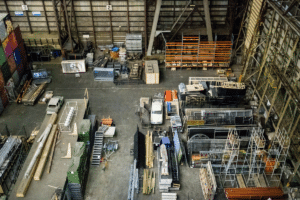
— Image sourced from the internet
The “leceh” part: Common application traps and sequences
So that’s how it works on paper, but in real life, the Malaysia industrial incentive application process has its own set of “traps.” Honestly, the biggest mistake I see bosses making is starting their project before they even talk to MIDA. In most cases, if you’ve already started production or issued your first invoice, you might have already missed the window to apply for Pioneer Status.
Actually, timing is everything. You need to have your “business case” ready while you are still in the planning phase. And don’t just copy-paste your old business plan. The evaluators want to see specific technical details. They want to know your “Managerial, Technical, and Supervisory” (MTS) index. If you just tell them “I am opening a factory,” they will just look at you and blink. Simply put, you need to prove you are a “desirous” company.
At the end of the day, navigating the world of Malaysia industrial tax incentives is always going to be a journey of “trial and error” for many. You’ll hear different stories from every consultant and every neighboring factory owner. But at the end of the day, it’s about finding the fit that doesn’t just save you tax money today, but makes your company stronger for the next decade. Whether you’re a family-run business looking to automate or a new tech startup choosing your first industrial site, just remember that the “incentive” is there to help you grow. Take your time, do the paperwork properly, and don’t be afraid to ask for a bit of help. After all, everyone wants to see a local “champion” succeed.
💬 2026 Industrial Incentives: The “Bottom Line” Guide
Essential answers on MIDA applications, tax efficiency, and the shift to Opex for Malaysian businesses.