Indonesia’s SOE Overhaul: Prabowo Orders Closure of More Than 750 State-Owned Enterprises by Year-End
Prabowo orders closure of 750+ Indonesian state-owned enterprises by end of 2026, saving 50 trillion rupiah. Major SOE overhaul reshapes public sector.
SEO Title: Indonesia SOE Closure | 750+ Firms Cut, Jakarta 2026
Deck: Indonesia’s sweeping state-owned enterprise restructuring — targeting closure of more than 750 entities out of a newly discovered total of 1,074 — is set to reshape the country’s public-sector landscape before December 31, 2026, with President Prabowo Subianto announcing savings already exceeding 50 trillion rupiah.
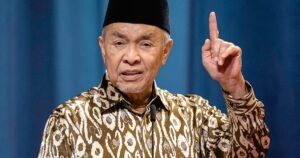
Indonesia’s state-owned enterprise overhaul entered a decisive phase on Friday, August 15, 2026, when President Prabowo Subianto addressed parliament in his annual state of the nation address, confirming that the government will close more than 750 state-owned enterprises by December 31, 2026, as part of what he described as potentially “the largest corporate restructuring in the world.” Delivered in Jakarta to a full session of lawmakers, the address revealed the full scale of a restructuring drive that has been quietly accelerating since the establishment of Danantara, Indonesia’s sovereign wealth fund, last year.
Organised under the executive authority of the Prabowo administration and operationally anchored to the Danantara sovereign wealth fund — which was created specifically to manage state assets — the programme has already shuttered 290 enterprises, with organisers of the policy projecting fewer than 300 SOEs remaining once the full round of closures is complete. The Indonesia SOE closure initiative sits at the intersection of fiscal reform, anti-corruption enforcement, and sovereign asset consolidation, making it one of the most consequential economic policy moves in Southeast Asia this decade.
Weeks Into the Audit and Jakarta Is Already Counting the Savings
With the December 31 deadline now formally on the record, the administrative machinery behind Indonesia’s SOE restructuring is already visibly in motion. Financial disclosures cited by the president in Friday’s address confirm that the closure drive has so far generated savings of approximately 50 trillion rupiah — equivalent to more than US$2.8 billion — drawn from the elimination of directors’ and commissioners’ salaries, building and vehicle rentals, and official business travel across entities already wound down.
This is not a simple asset sale or a quiet administrative merger.
It is a four-layered intervention: a fiscal consolidation, a governance audit, a sovereign wealth realignment, and the opening move in what may become a judicial accountability process spanning three decades of SOE management.
The speed of the audit itself caught even the president off guard. Prabowo told lawmakers he had assumed Indonesia operated somewhere between 300 and 400 state-owned enterprises — a figure widely circulated in policy circles for years. The actual count, surfaced only after Danantara began consolidating its asset register, came in at 1,074. That gap between assumption and reality is now driving the urgency of the entire restructuring timeline, and Indonesian fiscal reform advocates have pointed to it as evidence that the country’s public-sector accountability mechanisms had, for years, been operating on incomplete data.
From 1,074 Entities to Fewer Than 300, a Multi-Stage Consolidation Is Already Unfolding
The restructuring programme operates on a clear numerical logic: of the 1,074 state-owned enterprises identified following the Danantara audit, 290 have already been closed. The remaining closures — amounting to more than 750 enterprises in total — are scheduled for completion before December 31, 2026, leaving a rationalised portfolio of no more than 300 entities, each expected to meet a productivity and value-creation threshold.
In his address, Prabowo framed the selection criterion in direct terms: “We will close more than 750 enterprises and retain only those that are productive, those that create added value for the people.” The enterprises earmarked for closure are characterised, in the president’s own account, by a pattern of reporting losses while officially claiming profits — a discrepancy he described as fabricated accounting. SOE governance reform advocates in Jakarta have noted this framing signals that the closures are not purely about commercial viability, but about restoring the credibility of public financial reporting across the entire state enterprise sector.
The government’s stated savings target for 2026 is more than 70 trillion rupiah — against the 50 trillion rupiah already realised — meaning the second half of the year carries a significant portion of the projected fiscal benefit. Overhead categories driving those savings include executive compensation structures, property leases, fleet costs, and discretionary travel budgets across dozens of now-defunct entities.
Behind the 750-Closure Headline Is an Experiment in ‘Accountability-Led Rationalisation’
The real story here is not the raw number of closures, but the mechanism being proposed to prevent the same conditions from recurring.
In the same address in which he confirmed the restructuring timeline, Prabowo floated the creation of a special ad hoc court with a mandate to investigate the management and boards of state-owned enterprises going back as far as 30 years. The proposal, which requires legislative deliberation before it can be enacted, would extend accountability scrutiny well beyond the current administration — reaching into the governance records of entities established or mismanaged under governments dating to the mid-1990s.
Simultaneously, Prabowo asked lawmakers to consider what he described as a form of “special amnesty for those who repent” — a parallel track that would offer a defined offramp for executives or board members who come forward voluntarily with information about past misconduct. The combination of a punitive court mechanism and a conditional amnesty pathway is structurally analogous to truth-and-reconciliation frameworks used in post-conflict governance transitions, applied here to a corporate accountability context.
The sovereign wealth consolidation role of Danantara — the institution that surfaced the 1,074-entity figure — positions it not merely as an asset manager but as the informational backbone of the entire reform. The strategic ambition, as expressed from the presidential podium, is to shift Indonesia’s state enterprise sector from a sprawling, self-reporting, accountability-light system into a bounded, auditable, and productivity-defined portfolio.
Jakarta’s Scale Gives the Restructuring a Political Weight Few Markets Can Match
The choice of Jakarta as the setting for this announcement is itself a strategic decision worth noting.
Indonesia’s state enterprise sector has historically derived its political durability from geographic spread — SOEs operating in energy, logistics, construction, and financial services across an archipelago of more than 17,000 islands generate employment and local economic activity that makes any rationalisation politically costly in normal circumstances. The fact that a president is willing to name a specific closure figure — more than 750 — in a nationally televised parliamentary address signals a degree of executive confidence in the reform’s popular mandate.
Sourcing materials from the president’s address project cumulative savings, once all planned closures are complete, of more than 70 trillion rupiah for 2026 alone, with the official external figure for savings realised to date standing at “more than 50 trillion rupiah” (approximately US$2.8 billion). Public information confirms the restructuring is jointly driven by the executive office of President Prabowo Subianto and operationally enabled by the Danantara sovereign wealth fund. Legislative deliberation on the proposed special ad hoc court remains in progress at time of writing.
Frequently Asked Questions About Indonesia’s SOE Closure and Restructuring
How many state-owned enterprises is Indonesia planning to close? Indonesia’s President Prabowo Subianto confirmed on August 15, 2026, that the government will close more than 750 state-owned enterprises by December 31, 2026, reducing the total number of SOEs from 1,074 to no more than 300.
How many Indonesian SOEs have already been closed? As of August 15, 2026, 290 state-owned enterprises had already been closed as part of the restructuring drive announced by President Prabowo Subianto during his state of the nation address in Jakarta.
How much money has Indonesia saved from the SOE closures so far? The Indonesian government has saved approximately 50 trillion rupiah — equivalent to more than US$2.8 billion — in overhead costs through the SOE closures completed to date, according to President Prabowo’s address to parliament on August 15, 2026.
What is the government’s savings target from the full SOE restructuring programme? The Indonesian government’s stated savings target for 2026 from the full SOE restructuring is more than 70 trillion rupiah, covering overhead categories including executive salaries, building and vehicle rentals, and business travel costs.
What role does Danantara play in Indonesia’s state-owned enterprise overhaul? Danantara, Indonesia’s sovereign wealth fund established in 2025, conducted the asset audit that identified a total of 1,074 state-owned enterprises — a figure significantly higher than the 300 to 400 previously assumed — and now serves as the operational and informational foundation for the Indonesia SOE closure programme.
What is the proposed special court that President Prabowo mentioned? In his August 15, 2026 parliamentary address, President Prabowo proposed the creation of a special ad hoc court to investigate the management and boards of Indonesian state-owned enterprises going back approximately 30 years. The proposal requires legislative approval and was still under deliberation at time of writing.
Is there any amnesty provision for SOE executives involved in past misconduct? President Prabowo asked Indonesian lawmakers to consider a form of special amnesty for executives or board members who voluntarily come forward and acknowledge past misconduct — a parallel accountability track running alongside the proposed special ad hoc court, as stated in his August 15, 2026 state of the nation address.
A Restructuring on Record Scale, With the Hard Work Still Ahead
Indonesia’s SOE closure programme, as outlined by President Prabowo Subianto in his August 15, 2026 state of the nation address, represents one of the most ambitious public-sector rationalisation efforts undertaken anywhere in the world by a single government in a single calendar year. With 290 entities already closed, more than 750 more scheduled for closure before December 31, 2026, and a savings target of more than 70 trillion rupiah on the books, the programme’s numerical ambition is not in dispute. What remains to be seen is whether the proposed judicial mechanism — the special ad hoc court with a 30-year lookback — will advance through parliament, and whether the amnesty track will surface information that further reshapes the picture of how Indonesia’s sprawling state enterprise sector was actually managed.
For more information on Indonesia’s SOE closure and restructuring programme, readers may refer to:
- Official source: Office of the President of the Republic of Indonesia — www.presidenri.go.id
- Danantara Sovereign Wealth Fund: www.danantara.id
- Venue of announcement: Gedung DPR/MPR, Jl. Jend. Gatot Subroto, Senayan, Jakarta Pusat 10270, Indonesia
- State of the nation address date: August 15, 2026
Coverage based on reporting from President Prabowo Subianto’s state of the nation address to parliament, Jakarta, August 15, 2026.