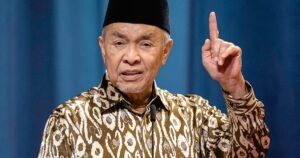
Rafizi Ramli Challenges the Narrative That Malays Are Losing Political Power in Malaysia
PKR leader Rafizi Ramli contests claims Malays are losing political power, arguing they’ve held uninterrupted authority. Explores governance and wealth distribution.
The PKR leader’s podcast remarks, delivered in response to Sanusi Nor’s “Tanah Melayu” comments during the Negeri Sembilan campaign, argue that racial grievance politics conceals a harder question: how has decades of political dominance actually been used?
PETALING JAYA — Bersama leader Rafizi Ramli used his podcast platform this week to directly contest one of the most persistent claims in Malaysian political discourse: that the Malay community is losing political power to minority ethnic groups. Speaking in the latest episode of his podcast, Rafizi argued the opposite — that Malays have held uninterrupted political authority throughout the country’s modern history — and that narratives suggesting otherwise are designed to obscure a more uncomfortable conversation about governance and wealth distribution.
“Malays have never been without political power. They have always held political power,” Rafizi said, speaking directly into a debate that had been reignited by controversial remarks made during the Negeri Sembilan state election campaign.
Sanusi Nor’s Campaign Remarks Provided the Opening
The immediate trigger for Rafizi’s comments was a statement attributed to Perikatan Nasional election director Sanusi Nor last month, during the Negeri Sembilan election campaign. Sanusi was reported to have said that the Chinese and Indian communities could look to their ancestral homelands if circumstances demanded it, but that Malays had only “Tanah Melayu” — the Malay homeland — to fall back on.
The remarks drew swift public criticism for appearing to cast doubt on the long-settled citizenship and belonging of Malaysian Chinese and Malaysian Indians. Sanusi subsequently denied that his words were intended to question the citizenship or rights of either community, but the episode had already re-energised a debate about race, belonging, and political power that surfaces reliably around election periods.
Rafizi chose not to let that debate pass without a structural challenge.
Decades of Pro-Malay Policy Have Not Resolved Malay Equity Gaps
At the centre of Rafizi’s argument is a pointed observation about outcomes. Malaysia has been governed for decades by administrations that explicitly championed Bumiputera policies — affirmative action frameworks directed primarily at the Malay community in areas ranging from education and public sector employment to corporate equity ownership. If the claim that Malays lack power were true, Rafizi argued, those decades of policy control would be impossible to explain.
The real question, in his framing, is not whether Malays hold power — but what has been done with it.
He noted that despite the long run of pro-Malay policy, Malay equity ownership had not been substantially improved at the community-wide level, raising the question of how the fruits of political dominance had been distributed and by whom.
This reframing shifts the terms of the debate considerably. Rather than a story of Malays versus minorities, Rafizi presents it as a story of elite capture — where political authority has been exercised in ways that have not consistently served ordinary Malay Malaysians, and where racial narratives are deployed to prevent that gap from being examined too closely.
Behind the Racial Claim Is a Classic Political Mechanism
The real story here is not ethnic competition for power, but the construction of a political distraction.
Rafizi laid out the mechanism plainly in his podcast remarks. When groups that have held power for extended periods begin to feel that dominance questioned — whether by a more informed electorate, shifting demographics, or policy scrutiny — they look for what he called a “bogeyman”: an external threat around which to rally supporters.
“Those who have held power for hundreds of years will naturally try to preserve that power. As society becomes more open and people begin questioning that status quo, those groups start looking for a bogeyman and emotional issues to rally around,” Rafizi said.
“Those emotional issues require an enemy. Overseas, that enemy might be minorities, immigrants or Muslims. In Malaysia, it becomes immigrants, the Chinese and the Indians.”
The pattern he describes is not unique to Malaysia — it is a documented feature of majoritarian politics in multiethnic societies worldwide. What Rafizi argued is that recognising the pattern is the first step to resisting it, and that Malay voters who accept the “losing power” narrative are, in effect, being redirected away from asking harder questions about accountability.
Pre-Independence History, Too, Is Contested Ground
Rafizi did not stop at contemporary policy. He also pushed back against historical accounts that frame the colonial era as a period during which Malays were progressively displaced by immigrant communities arriving under British administration.
His argument on this point is rooted in class as much as ethnicity. Political authority before independence, he contended, was concentrated within the Malay aristocracy — the raja and noble families who negotiated with the British — rather than among ordinary Malays. The suggestion that colonial-era developments represent ordinary Malays losing power to Chinese or Indian communities is, in this reading, a flattening of a more complicated history in which class and hereditary privilege played the determining role.
This is not a new argument in Malaysian historiography, but it is one that rarely surfaces in mainstream political speech, and Rafizi’s willingness to make it in a popular podcast format gives it broader reach than academic discussion typically achieves.
Frequently Asked Questions About Rafizi Ramli’s Political Power Remarks
What did Rafizi Ramli say about Malay political power? Rafizi Ramli, the Bersama leader, said in a podcast episode this week that Malays have always held political power in Malaysia, directly challenging claims that the community is losing power to Chinese and Indian Malaysians.
What prompted Rafizi’s remarks? Rafizi’s comments were a direct response to statements by Perikatan Nasional election director Sanusi Nor, who said during the Negeri Sembilan election campaign last month that Malays had only “Tanah Melayu” to fall back on, implying the Chinese and Indian communities had ancestral homelands elsewhere.
Did Sanusi Nor deny that his remarks were intended to question minority citizenship? Yes. Sanusi Nor denied that his remarks were intended to question the citizenship or rights of Malaysian Chinese and Indian communities, though his original comments had already drawn significant public criticism.
What is Rafizi’s argument about Bumiputera policy? Rafizi argued that because Malaysia has been governed for decades by administrations championing Bumiputera policies, the claim that Malays lack political power is contradicted by the historical record. He added that despite this long policy run, Malay equity ownership has not been substantially improved at the community level, raising questions about how power has been exercised.
How did Rafizi explain the recurring use of racial narratives in Malaysian politics? Rafizi said groups that have held power for long periods tend to manufacture a “bogeyman” — an external enemy — when their dominance is questioned. In Malaysia, he said, that role has been assigned to the Chinese and Indian communities, deflecting attention from governance and wealth distribution failures.
What did Rafizi say about pre-independence Malay political history? Rafizi disputed accounts suggesting that colonial-era developments showed ordinary Malays losing power to immigrant communities. He argued that political authority before independence was concentrated among the Malay aristocracy, not ordinary Malays, making it inaccurate to frame that period as a straightforward story of ethnic displacement.
Where can readers watch or listen to Rafizi’s podcast? Rafizi Ramli’s podcast is available through his official social media channels. Readers are advised to follow his verified accounts for the latest episodes, as distribution links were not individually specified in the episode coverage.
A Debate That Will Not Resolve Itself Before the Next Election
Rafizi’s podcast remarks land at a moment when questions of Malay political identity, minority rights, and the legacy of affirmative action are almost certain to intensify ahead of the next general election cycle. His argument — that the “Malays are losing power” claim is a structural distraction rather than a factual description — represents one of the more direct challenges to that narrative from within the political mainstream.
Whether that argument gains traction among Malay voters, or whether the emotional charge of racial grievance politics continues to outpace structural critique, remains the central unanswered question in Malaysian democratic politics.
For further reporting on Rafizi Ramli’s political commentary and related developments in Malaysian politics, readers may follow Free Malaysia Today at:
- Website: www.freemalaysiatoday.com
- WhatsApp Channel: whatsapp.com/channel/0029Va78sJa96H4VaQu6580F
- Google News: FMT on Google News
- Telegram: t.me/FreeMalaysiaToday