Seoul’s Warhead Count Puts North Korea’s Nuclear Arsenal at Up to 120, Challenging Trump’s Figure of 57
South Korea estimates North Korea holds 80-120 nuclear warheads, contradicting Trump’s claim of 57. Seoul’s defence minister addresses the discrepancy.
South Korea’s defence minister told parliament on Thursday that North Korea is estimated to hold between 80 and 120 nuclear warheads — a range that stands in direct contrast to US President Donald Trump’s publicly stated figure of 57 weapons.
Seoul, Thursday — South Korea’s defence minister has told a parliamentary committee that North Korea is believed to possess between 80 and 120 nuclear warheads, citing estimates derived from private research organisations and significantly diverging from a figure offered just one day earlier by US President Donald Trump.
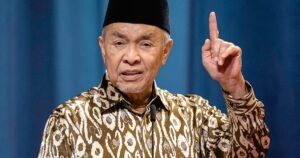
Defence Minister Ahn Gyu-back made the statement before lawmakers on Thursday when asked about Pyongyang’s nuclear stockpile. He was careful to frame the numbers as an estimate, not an official confirmation. “We usually see it as around 80 to 120, but it is considerably limited to state an exact number,” Ahn told the committee. He later clarified that the figure came from assessments by private research bodies, and that South Korea’s military could not formally verify the count.
The remarks came after Trump, speaking at the White House on Wednesday, stated that North Korean leader Kim Jong Un possessed 57 “very powerful nuclear weapons.” Asked directly about the discrepancy, Ahn acknowledged the gap plainly: “The numbers appear somewhat different.”
Trump’s 57-Warhead Claim Collides With Seoul’s Broader Estimate
The divergence between Washington’s stated figure and Seoul’s parliamentary briefing marks a rare moment of public friction between the two allies on a subject that South Korea has historically handled with considerable diplomatic caution.
The gap is not merely numerical — it reflects a deeper tension between Seoul’s denuclearisation policy and Washington’s increasingly direct engagement with Pyongyang.
For years, South Korea has deliberately avoided disclosing detailed estimates of North Korea’s nuclear stockpile, a posture rooted in its long-standing policy of not officially recognising Pyongyang as a nuclear weapons state. Ahn reaffirmed that position when asked directly whether Seoul acknowledged North Korea as a nuclear-armed state. “We cannot officially acknowledge that,” he said.
When pressed on whether Trump’s reference to 57 warheads constituted a form of US recognition of North Korea’s nuclear status, Ahn declined to weigh in. “It would not be appropriate for South Korea’s defence minister to comment on the US president’s remarks,” he said, drawing a careful line between allied solidarity and institutional restraint.
Seoul Reaffirms Its Non-Nuclear Stance Even As Diplomacy Shifts
Ahn used Thursday’s committee appearance to restate South Korea’s foundational defence position, even as the broader regional security environment shows signs of movement.
South Korea, he said, would continue to rely on the United States’ extended nuclear deterrence — the so-called nuclear umbrella — rather than pursuing independent nuclear capabilities or accepting the forward deployment of US tactical nuclear weapons on its territory. “We cannot develop nuclear weapons. Nor should we accept the deployment of US tactical nuclear weapons,” Ahn said, repeating a position Seoul has maintained consistently across successive administrations.
The remarks land at a moment of renewed diplomatic activity around the Korean Peninsula. Trump has indicated he expects to meet Kim Jong Un later this year — a potential resumption of high-level engagement that last took place through a series of unprecedented summits in 2018 and 2019. Those talks ultimately collapsed over disagreements on sanctions relief and the scope of North Korea’s denuclearisation commitments.
As part of what the Trump administration has framed as a goodwill gesture ahead of any resumed contact, the US has scaled back joint military exercises with South Korea. Trump described the drills as “hostile” to North Korea and indicated the reduction was intended to create a more favourable atmosphere for talks.
Pyongyang Responds Coolly as Trump Signals Willingness to Re-Engage
North Korea’s response to the reduced exercises was measured at best. Kim Yo Jong — the North Korean leader’s sister and one of the most influential figures within the Pyongyang leadership — said the curtailed drills remained “provocative and aggressive” despite their shortened duration. She dismissed any suggestion that the move would be interpreted as a meaningful concession by the North.
Kim Yo Jong also stated that she was unaware of any direct recent contacts between Trump and Kim Jong Un, while characterising the personal relationship between the two leaders as “excellent” — a framing that keeps the diplomatic door open without committing to any concrete pathway forward.
The cooling response from Pyongyang underscores the difficulty of translating Trump’s overtures into structured negotiations, particularly while fundamental disagreements over the nuclear programme and sanctions relief remain unresolved.
What the Warhead Gap Reveals About Intelligence and Posture
The distance between Trump’s figure of 57 warheads and Seoul’s range of 80 to 120 warheads matters beyond the arithmetic. Independent analysts and international policy organisations have long estimated North Korea’s stockpile in a range broadly consistent with Seoul’s parliamentary briefing. The US figure, offered in a White House setting without a detailed sourcing context, has drawn scrutiny from nuclear security researchers who consider it a likely undercount.
Ahn’s acknowledgement that even Seoul’s estimate is drawn from private research — not military intelligence the government is prepared to stand behind publicly — illustrates how opaque North Korea’s nuclear programme remains to outside observers. Pyongyang has never submitted its arsenal to independent verification, and the absence of any inspections regime means that all publicly available figures carry meaningful uncertainty.
What Thursday’s parliamentary session confirmed is that, whatever the precise number, both Washington and Seoul are now speaking about North Korea’s nuclear weapons in quantitative terms in public forums — a shift from the more abstract deterrence language that has historically dominated alliance communications on the subject.
South Korea’s defence ministry has not issued a formal statement updating or revising the figures presented by Ahn. The minister’s comments stand, for now, as the most detailed public accounting Seoul has offered of its assessment of Pyongyang’s nuclear stockpile.