48 Million Unbuilt Homes Set to Keep China’s Property Crisis From Resolution
China’s property crisis reveals 48 million unbuilt homes—a backlog larger than Germany’s housing stock. Explore the structural challenges keeping resolution out of reach.
China’s property crisis, measured across pre-sales data from 2015 through mid-2024, has left at least 48 million completed-but-undelivered homes across the country — a backlog larger than Germany’s entire 2021 housing stock — with a shrinking construction workforce and collapsing buyer confidence compounding the pressure on developers.
SEO Title: China Property Crisis | 48M Unbuilt Homes Stall Recovery
Introduction
Stretching back across nearly a decade of pre-sales data, and now crystallised in a single staggering figure, China’s property crisis is showing few signs of structural resolution. Organised through the analytical framework of Bloomberg Intelligence and co-authored by analysts Kristy Hung and Monica Si, the report draws on pre-sales records from 2015 through the first half of 2024 to establish that at least 48 million homes sold to buyers across China remain unbuilt. The figure is not a forecast — it is an accounting of what has already been promised and not delivered, and organisers of market-monitoring bodies project the shortfall is still widening. The China property crisis sits at the intersection of developer insolvency, demographic decline, and a fundamental shift in how Chinese households now choose to buy property.
With Pre-Sales Data In Hand, The Scale Is Already Visible
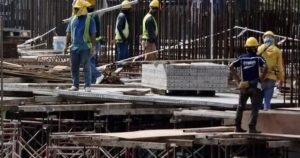
With the Bloomberg Intelligence report now in circulation, the picture it paints is already shaping how analysts, policymakers, and prospective homebuyers interpret China’s housing market. Construction sites that were once bustling with migrant workers stand at various stages of incompletion across dozens of Chinese cities. Pre-sale agreements — signed by buyers who paid upfront for homes that have not yet been built — are accumulating into a legal and financial liability that spans the entire developer ecosystem.
This is not a simple construction delay.
It is a liquidity crisis, a demographic constraint, a confidence collapse, and a structural market correction unfolding simultaneously.
The report places the non-completion shortfall at 8.4 billion square metres for all sales made from 2000 through the first half of 2024 — approximately 38% of the cumulative total across that period. The non-completion ratio, which averaged 17% of annual sales before 2015, soared to 47% between 2015 and 2023. These numbers suggest that the deeper the pre-sale culture extended into the market, the larger the gap between what was promised and what was built became.
From Developer Liquidity To Labour Shortages, Years Of Compounding Pressures Are Now Visible
The Bloomberg Intelligence report operates across a full range of variables, not just developer finances. China’s property sector is navigating multiple headwinds simultaneously. Developers have continued to suffer from acute liquidity shortages despite a national rescue package that included a 300 billion yuan (approximately US$42 billion) relending programme. New home residential sales fell a further 19.7% in July 2024 alone, deepening a contraction that has now persisted across multiple quarters.
According to the report, there is a statistically significant correlation between annual home completions and the number of active construction workers in China. That workforce peaked at 61 million in 2014 and has since declined by 25%, leaving the sector with roughly 45.75 million workers to absorb a backlog that was accumulated during peak pre-sale years.
The demographic dimension of the crisis is equally concrete. The average age of migrant construction labour rose to 43 in 2023, up from 38 in 2014. Workers aged 50 and above now represent 31% of the sector’s workforce, compared with 17% a decade earlier. Meanwhile, workers below the age of 30 have declined from 34% to just 17% of the total — a contraction attributed partly to construction wages that remain below China’s average national wage. As Hung and Si note in the report, this ageing workforce cannot be rapidly replaced, and the pipeline for younger entrants has narrowed structurally, not cyclically.
The real mechanism at work here is not just financial distress at the developer level, but a physical incapacity to complete homes at the pace required to clear the backlog.
Completed homes accounted for 27% of new home sales in the first half of 2024, compared with just 10% for all of 2021. Existing-home sales overtook new home sales by area for the first time on record in 2023 — a shift that Hung and Si describe as a fundamental change in buyer preference, one that poses a direct threat to developer revenue models built around pre-sales.
Behind The 48 Million Figure Is An Experiment In ‘Confidence Withdrawal’
The real story here is not the 48 million figure in isolation, but the buyer behaviour it is beginning to generate.
If prospective homebuyers across China internalise the scale of undelivered pre-sale commitments, the rational response is to avoid pre-sales of new developments entirely. Buyers who follow that logic will instead direct purchases toward completed homes or the second-hand market. According to Hung and Si, this is already happening: completed home purchases rising, new pre-sale commitments declining, and the second-hand market absorbing demand that would previously have flowed to developers.
The compounding effect is severe. As pre-sale volumes fall, developers lose the forward cash flow that has historically funded construction. Less construction cash flow means slower completions. Slower completions validate buyer reluctance to commit to pre-sales. The loop closes on itself, producing a self-reinforcing cycle that the 300 billion yuan relending programme has not yet broken.
The strategic question now is whether policy intervention can shift the housing market from a pre-sale-dependent model into one anchored by completed inventory — a structural transformation that would take years, not quarters.
The Bloomberg Intelligence Report’s Figures Give The Crisis A Quantified Base
The choice of methodology here is itself a strategic decision worth noting. Bloomberg Intelligence’s analysts grounded their findings in pre-sales data stretching back to 2015, allowing a decade-long view of the non-completion ratio rather than relying on single-year snapshots that might obscure longer-term structural deterioration.
The 48 million unbuilt homes figure is drawn from cumulative pre-sales across that period. For reference, Germany’s total housing stock in 2021 stood at approximately 43.4 million units — meaning China’s undelivered pre-sale backlog, on its own, exceeds the entire residential inventory of Europe’s largest economy. Sourcing materials project that without a meaningful acceleration in construction completions, the backlog will persist well into the second half of this decade.
The official external policy response, as articulated through the 300 billion yuan relending programme, targets developer liquidity rather than the construction workforce shortage directly. Public information confirms the Chinese government is aware that both demand-side and supply-side factors are contributing to the slowdown, but the specific interventions targeting labour pipeline development remain limited as of mid-2024. The non-completion ratio — the most reliable structural indicator in the Bloomberg Intelligence report — is still in motion and has not yet shown a confirmed reversal.
Frequently Asked Questions About China’s Property Crisis
How many unbuilt homes are currently sitting in China’s property backlog? According to a Bloomberg Intelligence report authored by analysts Kristy Hung and Monica Si, at least 48 million homes in China have been sold through pre-sale agreements but have not yet been completed as of mid-2024, based on pre-sales data from 2015 onward.
How does China’s unbuilt home figure compare to other countries? The 48 million unbuilt homes in China’s pre-sale backlog is larger than Germany’s entire housing stock, which stood at approximately 43.4 million residential units in 2021, making it one of the largest undelivered housing backlogs in recorded economic history.
What is China’s non-completion ratio, and why does it matter? China’s housing non-completion ratio — the share of homes sold that have not been built on schedule — averaged 17% of annual sales before 2015 but climbed to 47% between 2015 and 2023, according to Bloomberg Intelligence. A rising non-completion ratio signals that developers are selling homes faster than they are building them, which erodes buyer trust and threatens future pre-sale revenues.
How much did China’s new home sales fall in July 2024? New home residential sales in China fell by 19.7% in July 2024, continuing a multi-quarter contraction that has persisted despite a government rescue package that included a 300 billion yuan (approximately US$42 billion) relending programme.
Why is China’s construction workforce declining, and how does that affect the housing crisis? China’s construction workforce peaked at 61 million workers in 2014 and has since declined by approximately 25% to around 45.75 million. The average age of migrant construction workers rose to 43 in 2023, with workers over 50 now comprising 31% of the total. Younger workers below 30 have dropped from 34% to 17% of the workforce, partly because construction wages remain below China’s national average wage. Bloomberg Intelligence identifies a direct correlation between this workforce decline and slower home completion rates.
Are Chinese buyers still purchasing homes through pre-sales? Buyer behaviour is shifting away from pre-sales. Completed homes accounted for 27% of new home sales in the first half of 2024, up sharply from 10% for all of 2021. Existing-home sales also overtook new home sales by area for the first time on record in 2023, indicating that buyers are increasingly unwilling to commit upfront to homes that have not yet been built.
What is the total shortfall in home completions across all of China’s sales history? Bloomberg Intelligence calculates that home completions were short by 8.4 billion square metres for all sales made between 2000 and the first half of 2024, representing approximately 38% of the cumulative sales total across that period.
China’s Property Crisis: Where The Numbers Stand Now
The Bloomberg Intelligence report offers a rigorous and sobering baseline for understanding how deeply structural China’s property crisis has become. The 48 million unbuilt homes figure is not a prediction of future risk — it is a current accounting of pre-sale commitments that have not been fulfilled, layered on top of a workforce that is ageing out of the sector and a buyer pool that is actively redirecting demand toward completed and second-hand housing.
The 300 billion yuan relending programme remains the primary official intervention on record, but analysts Kristy Hung and Monica Si have framed the challenge as one that liquidity alone cannot resolve. Physical construction capacity — determined by the number, age, and wage competitiveness of the country’s construction workforce — is the binding constraint that financial policy has not yet addressed.
For ongoing coverage of China’s property crisis, Bloomberg Intelligence’s full report is available through Bloomberg terminals and affiliated research portals. The Free Malaysia Today business desk will continue tracking developments in China’s housing market as new data becomes available.
Source: Bloomberg Intelligence report by analysts Kristy Hung and Monica Si, drawing on pre-sales data from 2015 through H1 2024.